
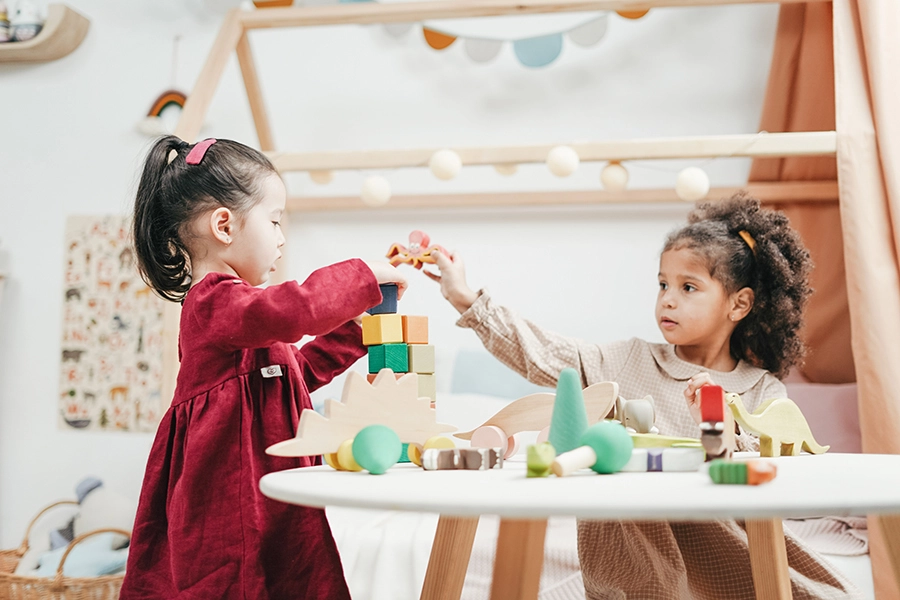
Social communication means knowing how to interact with others in play, conversation and in everyday tasks. Social communication is nuanced and involves many skills. It also includes an understanding of abstract language used in social interactions as well as social situations themselves. These skills often involve knowing the ‘hidden rules’ and what is expected in different scenarios and with different people.
Social Skills change depending on where we are and what we are doing. For example, the way we expect a child to act with a group of friends usually differs from the way they act at the doctor’s office. And we would expect much more energy outside on a jungle gym than in a library!
Social Communication Skills
When kids work on social skills, they learn to interact with other children, family, teachers and employers effectively and with more confidence. Importantly, kids who struggle with social skills work to better know common expectations for interacting with others.
Social communication involves many different skills. These skills may include:
- Using gestures
- seeing another’s point of view
- reading body language
- taking turns
- changing the topic
- maintaining relationships
Differences in Social Skills
Often kids with difficulties using social skills don’t know the hidden rules. They might find different situations challenging because of the social expectations of others. However, kids can learn what many of these hidden rules are and learn to interact in a way that they can better communicate with others.
The purpose of social communication therapy is not to make a child behave like other kids and act out social expectations. The purpose is to gain a better understanding of social expectations, learn to understand social situations, learn to resolve misunderstandings and to express themselves as they are!
Social Communication Therapy at Verbalyze
We help kids learn the hidden rules of social communication and help them build awareness of themselves and others.
We also give kids the structure they will need to participate in and maintain social skills with their peers. Our clients learn to ask questions, make comments, play in a group and think about the perspectives of others. By giving our clients the tools they need for social interaction, they are better supported in having conversations, making friends and growing relationships.
If you would like to speak with a licensed speech therapist, please use the link below.